13 Oct, 2026
The fasteners and metal industry plays a vital role in modern infrastructure, industrial manufacturing, transportation, energy, and construction. From heavy-duty bolts used in industrial machinery to precision fasteners used in railway projects and structural engineering, these components help create strong, reliable, and durable connections.
India's growing manufacturing capabilities and infrastructure development are creating new opportunities for metal component manufacturers, fasteners suppliers, distributors, and international buyers. According to the World Steel Association's April 2026 outlook, India's steel demand is projected to grow by 7.4% in 2026, highlighting the importance of infrastructure and industrial activity in the country's development.
For businesses operating in this sector, the future will depend on product quality, engineering precision, material selection, technological development, and the ability to meet customer requirements. Source: World Steel Association
Fasteners are essential components in almost every major industrial sector. Bolts, nuts, washers, studs, and specialized fastening systems are used to assemble, secure, and maintain mechanical and structural connections.
Major applications include:
Infrastructure and construction: Structural connections, bridges, industrial buildings, and large construction projects.
Railways and transportation: Railway infrastructure, rolling stock, track-related applications, and transport equipment.
Automotive and engineering: Machinery assemblies, automotive components, and heavy equipment.
Energy and power: Industrial installations, energy infrastructure, and equipment assemblies.
Oil and gas: Industrial piping systems, equipment, and applications requiring specified mechanical properties.
As engineering projects become more demanding, buyers increasingly need fasteners that match the required dimensions, material specifications, mechanical properties, and applicable standards.
High-tensile fasteners are designed for applications that require specified strength and mechanical performance. They are widely used in industrial equipment, structural assemblies, machinery, and engineering projects.
Selecting the right fastener requires consideration of several factors:
Required bolt and nut dimensions.
Property class or material grade.
Applicable DIN, ISO, ASTM, or other relevant standards.
Operating temperature and environmental conditions.
Surface finish and corrosion protection requirements.
Installation method, tightening procedure, and joint design.
For example, metric bolts in property classes 8.8 and 10.9 have different mechanical requirements. The appropriate selection depends on the engineering design and the intended application.
Choosing a fastener solely on price without checking its specifications can result in compatibility problems, premature failure, or unnecessary maintenance costs.
Material selection is one of the most important decisions in fastener manufacturing. The required performance of a component depends on its application, loading conditions, operating environment, manufacturing process, and relevant standards.
Common considerations include:
Carbon and alloy steel: Frequently selected for industrial fasteners requiring specified strength and mechanical properties.
Stainless steel: Used where corrosion resistance is an important requirement, subject to the relevant grade and service conditions.
Special alloy materials: Selected for applications that demand particular temperature, corrosion, or mechanical-performance characteristics.
Material selection should always be based on the technical requirements of the project. Appropriate inspection, material documentation, and verification procedures help buyers establish confidence in supplied components.
International standards help manufacturers, engineers, procurement teams, and distributors communicate technical requirements consistently.
Some widely used standards and specifications include:
ISO: International standards covering many dimensions and mechanical requirements.
DIN: Standards developed by the German Institute for Standardization, with many established fastener specifications used internationally.
ASTM: Standards covering materials, testing methods, and product specifications across numerous industrial applications.
IS: Indian Standards applicable to relevant products and engineering requirements.
Buyers should verify the exact standard, edition, dimensions, grade, testing requirements, and acceptance criteria specified in their purchase documents. Standards are not automatically interchangeable simply because products have similar dimensions.
Fasteners may operate in environments exposed to moisture, chemicals, temperature changes, or other conditions that affect service life.
Depending on the application, available finishing options can include:
Hot-dip galvanizing.
Electro-galvanizing.
Black phosphate finishes.
PTFE or other specified coating systems.
Other application-specific protective finishes.
The correct finish depends on the required corrosion protection, coating thickness, dimensional tolerances, installation conditions, and compatibility with the base material.
For high-strength fasteners, coating processes also require appropriate technical controls. For example, the risk of hydrogen embrittlement must be evaluated where applicable. Buyers should specify the required coating standard and verification criteria before placing an order.
Choosing a reliable fasteners manufacturer is an important procurement decision. Buyers should assess more than the quoted price.
Product range: Can the supplier provide the required bolts, nuts, washers, studs, and specialized fasteners?
Technical capability: Can the supplier work to the specified dimensions, grades, drawings, and applicable standards?
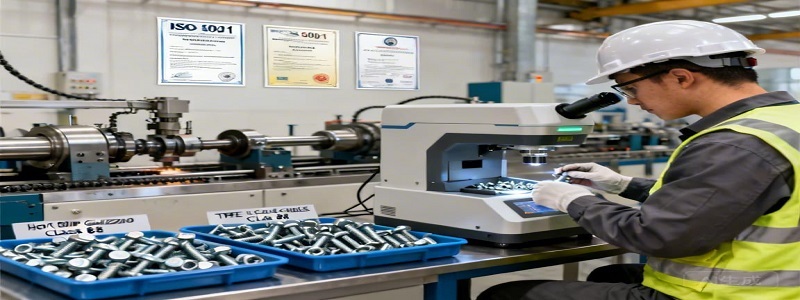
Quality assurance: Are appropriate inspection procedures, test reports, and material traceability available where required?
Customization: Can the supplier evaluate application-specific sizes, materials, finishes, and documentation requirements?
Delivery planning: Can the supplier communicate realistic lead times, packaging requirements, and dispatch arrangements?
Export readiness: Can the supplier support the documentation, packaging, and shipping requirements applicable to the destination market?
A structured supplier evaluation helps procurement teams reduce uncertainty and build dependable long-term supply relationships.
The fasteners industry is evolving alongside wider changes in metal manufacturing. Process automation, dimensional inspection, improved production controls, digital documentation, and more consistent quality management can help manufacturers meet increasingly demanding customer requirements.
Technology can support improved production repeatability, reduced defects, better process monitoring, and more reliable delivery planning.
At the same time, sustainability is becoming an important consideration across the metal value chain. Material efficiency, waste reduction, responsible energy use, and improved production processes can contribute to more resource-efficient manufacturing.
The strongest long-term opportunities will belong to businesses that combine technical expertise, consistent quality, customer service, and continuous improvement.
TUFF, the fasteners brand of Pioneer Nuts & Bolts Private Limited, is associated with industrial fasteners manufacturing and supply from Ludhiana, Punjab, India.
For buyers searching for a fasteners manufacturer in India, evaluating a supplier's product range and technical suitability is an important first step. Product requirements should be clearly defined so that the appropriate specifications, material grades, finishes, and documentation can be evaluated before an order is finalized.
Whether the requirement involves heavy hex bolts, hex bolts, hex nuts, washers, or other industrial fastening products, selecting the right product for the intended application remains essential.
TUFF aims to connect with industrial buyers, distributors, procurement professionals, and engineering businesses looking for fasteners supply solutions.
Explore the website to learn more about TUFF fasteners and available product information.
Website: https://www.tuffbolt.com
Email: sales@tuffbolt.com
The future of the fasteners and metal industry in India will be shaped by industrial development, infrastructure investment, engineering requirements, manufacturing technology, and international trade.
For manufacturers, quality consistency and technical capability are essential. For buyers, choosing the right fasteners manufacturer means evaluating specifications, material quality, standards, inspection requirements, delivery commitments, and supplier reliability.
As industrial applications continue to evolve, dependable fasteners will remain a critical part of building, assembling, and maintaining the equipment and infrastructure that support modern industry.
Looking for industrial fasteners from India? Visit https://www.tuffbolt.com to explore TUFF fasteners and contact the team regarding your product requirements.

If you have any question regarding our products, Please send us your message by filling up the form. We will revert back shortly.
Address
PIONEER NUTS & BOLTS PVT. LTD.
Unit-1
13-B , Friends Industrial Estate,
Focal Point, Ludhiana - 141010 , Punjab (India)
Stay connected with Pioneer 

© 2019 Pioneer
more than 25 years of experience

